The FUE (Follicular Unit Extraction) technique is a surgical procedure for hair transplantation that extracts follicular units individually from the donor area, without the need for incisions, stitches or visible scars. It is suitable for men and women with different types of alopecia and is ideal for those who prefer to avoid scars or wear their hair short. Although it offers natural and discreet results, it requires more training and skill from the medical team compared to other techniques.
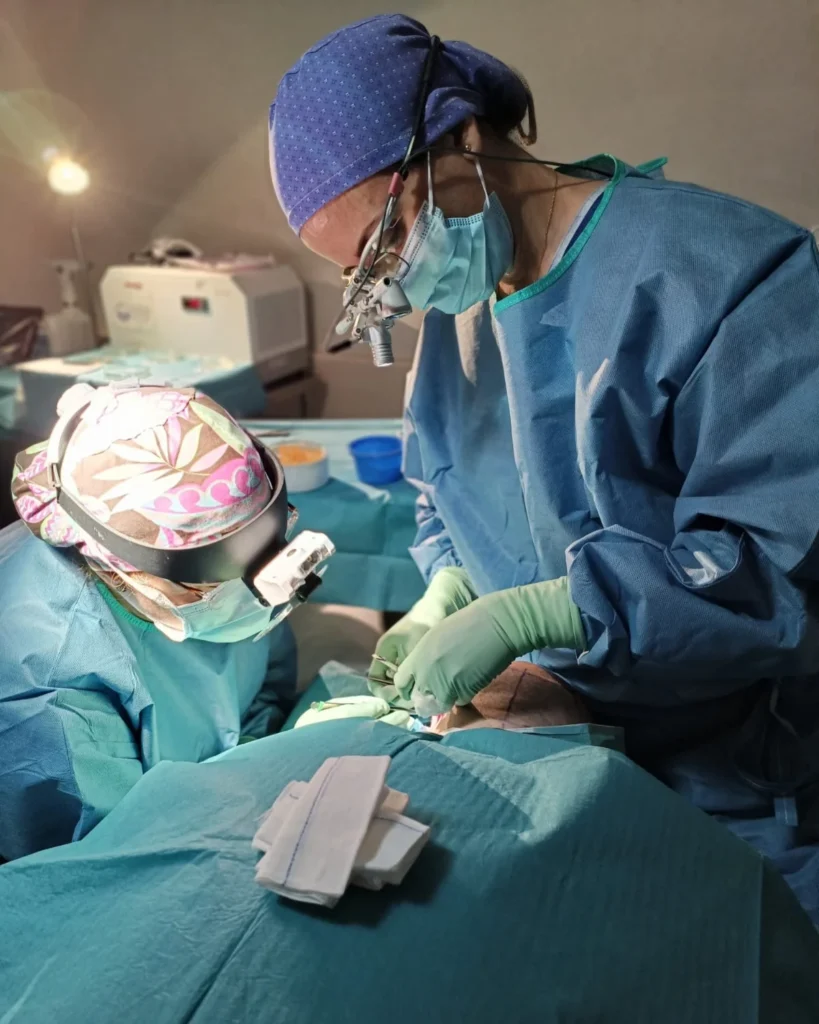
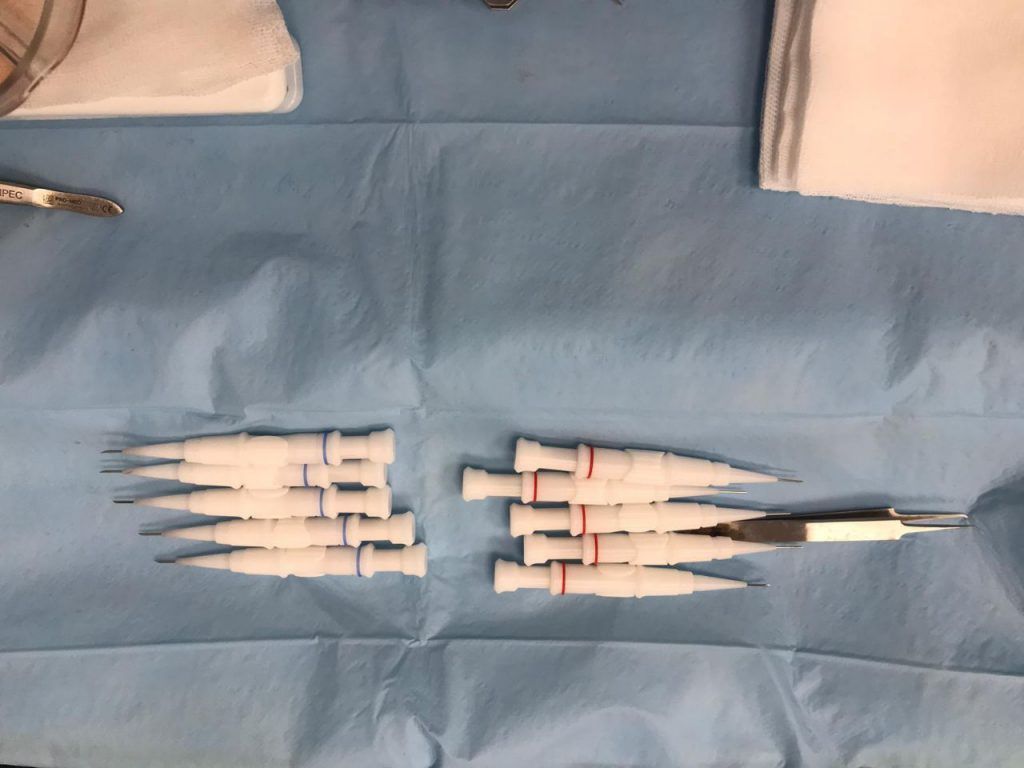
The FUE technique leaves small incisions in the donor area that heal in a few days or weeks, becoming almost imperceptible. With the growth of the remaining hair, the area regains its original appearance. The extracted follicles are implanted with the DHI technique, which uses devices called Implanters to place each graft with precision, ensuring a natural result and maximizing its survival.
The duration of the FUE technique depends on the number of grafts to be transplanted. A session of 1200-1600 grafts takes between 6 and 8 hours, while larger procedures may require more time or even two days for sessions of more than 3000 grafts. Given its level of precision, this technique demands more time and skill. The naturalness of the transplant depends on the surgeon’s skill in designing a harmonious implant line, distributing the density appropriately and minimizing scarring.
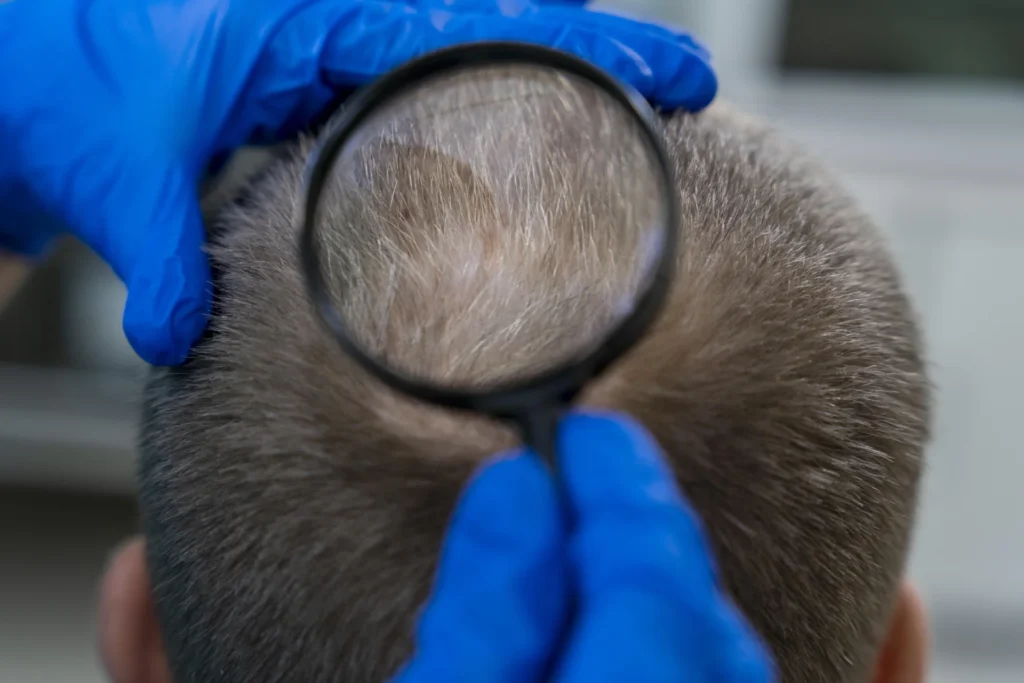
The choice of treatment depends on the type of alopecia and the patient’s needs. Are you interested in a particular treatment?
Generally men and women with localized hair loss (as in androgenetic alopecia), with good density in the donor area (the back and sides of the head). A medical evaluation will determine the viability according to age, type and degree of baldness and general health.
The procedure is performed under local anesthesia, so it does not hurt during surgery. During the postoperative period, there may be some discomfort, tightness or pressure, but it is manageable with mild analgesics.
Between 6 and 10 hours, depending on the number of follicles to be transplanted. The procedure is performed in a single day, pausing for a short break and lunch.
No. Transplanted hair comes from areas that are genetically resistant to hair loss (donor area), so it normally remains for life. However, native (non-transplanted) hair may continue to fall out if the underlying alopecia is not stabilized.
Yes, although infrequent and generally mild, that is why the initial assessment and complete information on postoperative care is very important.
It will depend on the degree of alopecia and the desired density. An initial assessment is essential when determining the size of the session that will be needed. The condition of the donor area will also determine the possibilities of extracting a greater or lesser amount of grafts.
Postoperative care is the key to a good result.
The DHI (Direct Hair Implant) technique allows implanting the hair follicle directly into the scalp through a single movement; just at the moment of inserting the needle, the graft is released in its new location. This allows us to manipulate the graft as little as possible and ensure its survival. The use of the implanter, (a retractable device with a needle where the graft will be inserted), allows to control the direction, angulation and depth where the graft is to be left; all this gives much precision and control to the doctor, who is the one who performs the whole implantation process.
Dr. Tiravanti is the one who will perform your entire procedure, from the extraction of grafts from the donor area to the implantation in the recipient area. She is the one who performs, coordinates and manages the entire surgery. She is assisted by the specialized technicians, who are the ones who count, classify and prepare the follicular units for their subsequent implantation. Teamwork is essential to achieve the best results.
